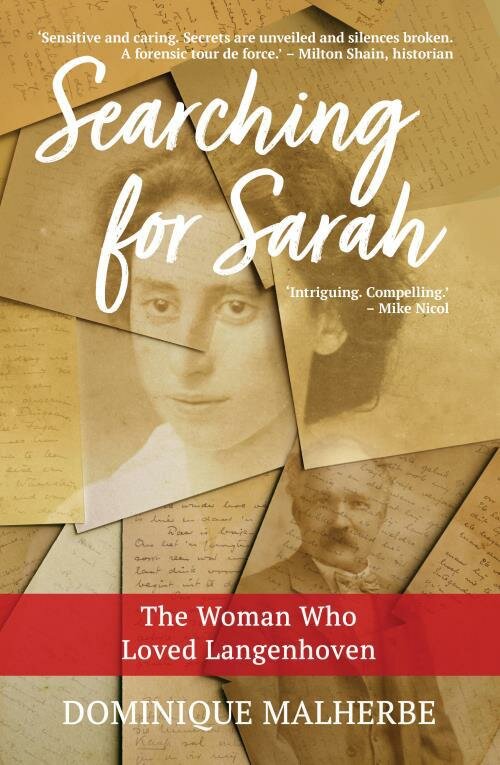
 Searching for Sarah
You could call it a 20th century love story but it is so much more than that. This is a biography that seeks, and succeeds, in doing justice to the achievements of a woman who was also part of a ménage a trois in a country, and during a time, when such situations were seldom discussed.
One of the many people Malherbe interviewed during her extensive research around her great-aunt Sarah was Guillaume Brümmer, Langenhoven’s grandson and his wife Laetitia . Sarah was godmother to their four children. It was Guillaume who confirmed that Langenhoven and Sarah had had a love child, a boy, who she had to give up for adoption.
The library at Stellenbosch University was another useful source of information which the author visited many times, trawling through reams of letters. Relatives and friends of Sarah, along with museum records all played roles in Malherbe’s quest for the truth .
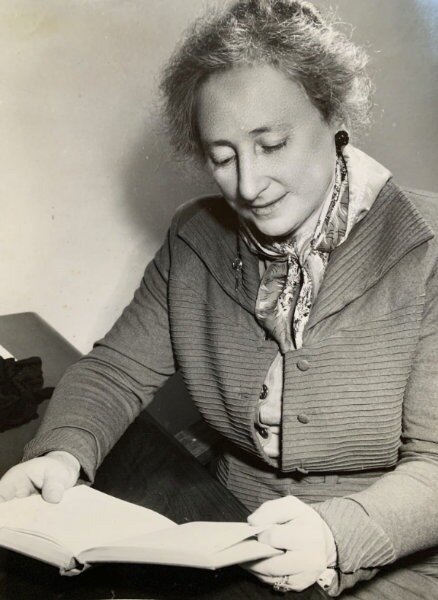 Sarah Goldblatt
Sarah Goldblatt was born in 1889 in London and arrived in Cape Town in 1897 when her parents moved to South Africa. Being the eldest child she had to leave school after standard 4 and help her father David with his printing press business, but she continued to educate herself, including adding Dutch and German to her repertoire. At 22 she qualified as a primary school teacher, but soon applied for a job at the Oudtshoorn newspaper Het Zuid-Western as assistant editor. This is where she met CJ Langenhoven who was editor: within a short time Sarah became an “intimate houseguest” and Langenhoven , who described this period as one of the best in his life, said that he “made her an Afrikaner, just as I was myself.”
Their close connection spanned nearly 20 years until Langenhoven’s death in 1932. Sarah, who became as dedicated to Afrikaans as she was to Langenhoven’s writings, spent many hours introducing the language into schools, and giving private lessons to university students, diplomats and parliamentary leaders.
As the administrator of Langenhoven’s literary output, Sarah’s contribution to his legacy and his works is best summed up as follows: After his death an initial set of his works was published between 1933 and 1935. In the following two decades, new editions were published which quickly sold out. By the advent of the final edition in 1974 two million copies of his books had been sold, averaging 35 000 per year since 1914 – one of the greatest publication successes in SA history.
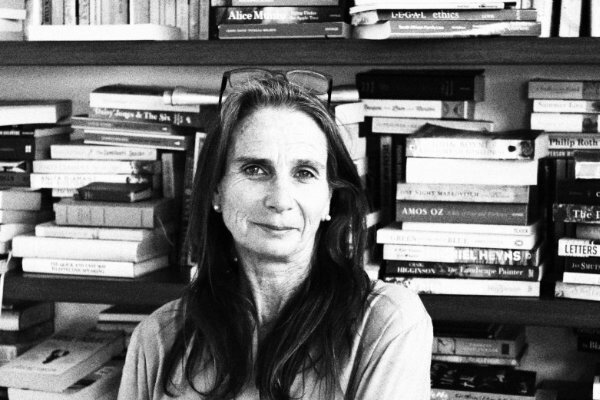 Dominique-Malherbe
By way of contrast Malherbe points out frequently that in JC Kannemayer’s biography of Langenhoven (1995) his treatment of Sarah is indifferent, almost dismissive – which also contributed to her determination to tell the other side of Sarah’s story. However she also admits that her great-aunt was formidable and could be both disagreeable and difficult. Sarah apparently did not communicate well with her family, but relied more on friends – who included a number of prominent female Afrikaans writers. Of these it was especially the late Elsa Joubert who was a close friend who continued to visit her on her deathbed
Sarah Goldblatt died alone in a hospital in Stikland in May 1975 from pneumonia and heart failure at the age of 86.
Malherbe suggests that writing this story could also have been influenced by the large number of women’s stories being published world-wide in the MeToo movement. It is not difficult to see the family resemblance between Dominique Malherbe and Sarah when comparing photographs. It is even easier to note shared similarities when reading about Malherbe’s successful career, her work ethic and meticulous research.
 Myrna Robins
Searching for Sarah by Dominique Malherbe.
Published by Tafelberg, Cape Town, 2021.
Read more about Tafelberg – CLICK HERE

